Discover Tell Mar Elias, One of Jordan’s Important Religious Heritage Sites
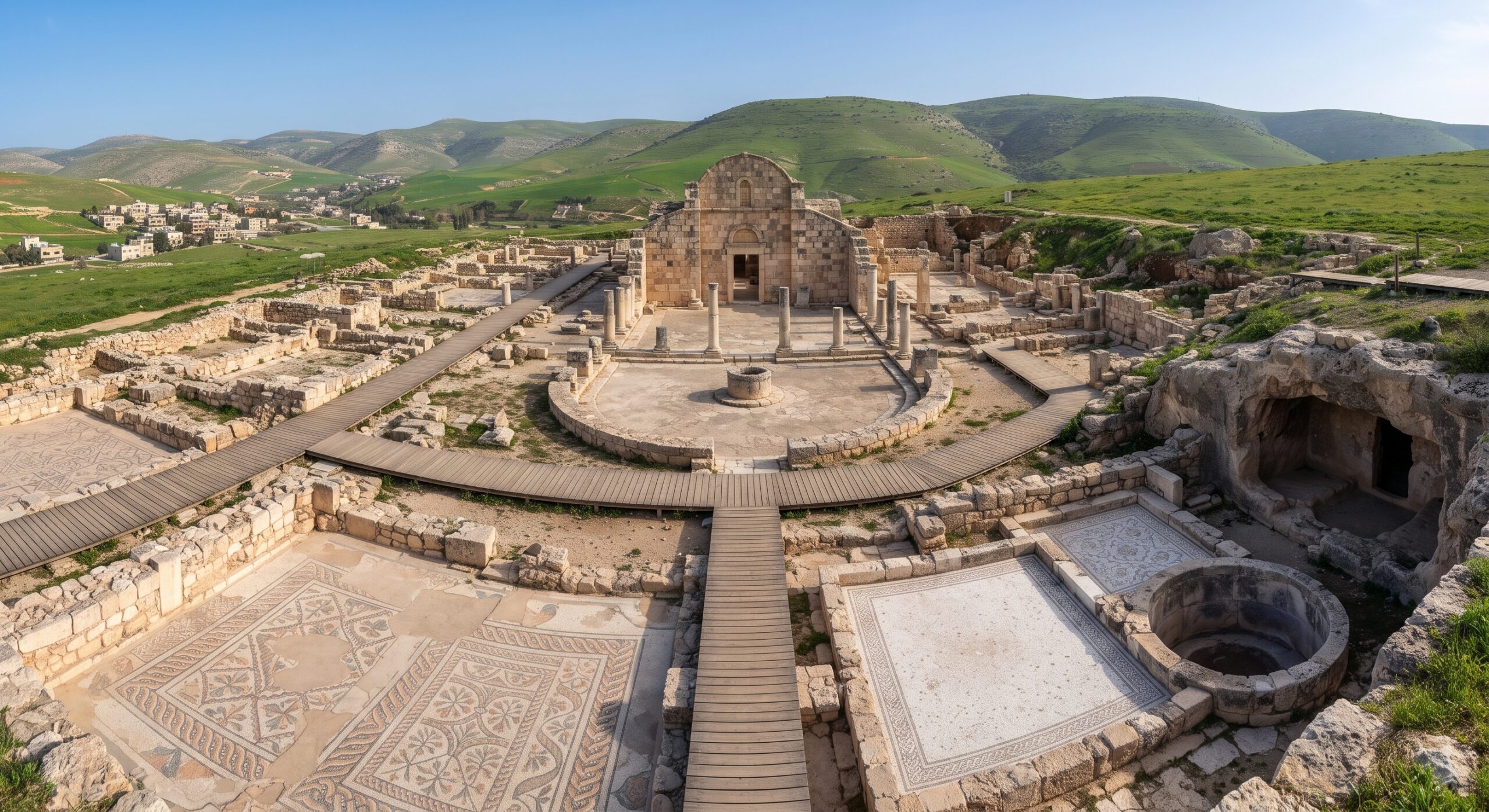
Set among the green hills of northern Jordan, Tell Mar Elias Archaeological Site is a place where history, faith, and archaeology come together. Associated with the Prophet Elijah, the site preserves the remains of remarkable Byzantine churches and offers a glimpse into the religious life of the region more than 1,300 years ago.
For travelers interested in biblical sites in Jordan, early Christian history, and archaeological discoveries, Tell Mar Elias offers an opportunity to explore an important part of the country’s spiritual and cultural heritage.
The archaeological remains tell a story of worship, community life, and religious devotion. As you walk through the site, you can discover the foundations of ancient churches, traces of colorful mosaic floors, and structures that once served the clergy who lived and worshipped here.
The History and Name of Tell Mar Elias
The name Tell Mar Elias is associated with the Prophet Elijah, known in Arabic as Mar Elias. According to a long-standing local tradition, the area is connected with his birthplace, believed to have been the ancient village of Thisbe, now identified with the nearby village of Listib.
Located approximately half a kilometer west of the archaeological site, Listib and Tell Mar Elias form part of the same historical and geographical landscape. The traditional association between the village and the prophet has contributed to the area’s religious importance over the centuries.
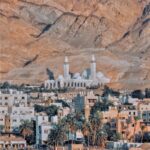
Archaeological evidence also reveals that the surrounding area remained significant during later periods. Byzantine communities lived here, while a nearby mosque in Listib reflects the continued religious presence of the area during the Umayyad period.
Today, visitors can explore the remains of this ancient religious landscape and discover how different periods contributed to the history of northern Jordan.
The Prophet Elijah in Biblical Tradition
To understand the significance of Tell Mar Elias, it helps to explore the traditions associated with the Prophet Elijah.
In biblical accounts, Elijah lived during the ninth century BC and became known for calling people to worship God rather than the pagan deity Baal. His mission brought him into conflict with King Ahab and Queen Jezebel, who opposed his teachings.
According to the biblical narrative, Elijah faced persecution and travelled through different parts of the region. During a period of famine, he sought refuge near the Brook Cherith, where he was sustained by water from the stream and food brought by ravens.
The biblical story also describes Elijah’s departure from earthly life in a chariot of fire, witnessed by the Prophet Elisha near the Jordan River.
Several locations across Jordan and the wider region have been associated with events in Elijah’s life. Tell Mar Elias is one of the places linked to his memory, while other local traditions connect him with areas near the Jordan Valley.
These religious associations have helped establish the site as a destination for visitors interested in the biblical heritage of Jordan.
The Prophet Elijah in the Holy Quran
The Prophet Elijah, known in the Quran as Ilyas, is also mentioned in Islamic tradition.
The Quran refers to him among the righteous prophets in Surah Al-An’am, verse 85:
“…and Elias—all were among the righteous.”
His story is also presented in Surah As-Saffat, verses 123–132. These verses describe his call to his people to abandon the worship of Baal and return to the worship of Allah alone.
The shared religious significance of Elijah across different traditions adds another dimension to Tell Mar Elias. It helps explain why the surrounding landscape has remained meaningful to communities with different religious backgrounds.
For visitors exploring religious and biblical heritage in Jordan, the site offers an opportunity to learn about the traditions that have shaped the region’s identity.
Archaeological Discoveries at Tell Mar Elias
Systematic archaeological excavations carried out by Jordan’s Department of Antiquities between 1998 and 2002 uncovered important remains at Tell Mar Elias.
Among the most significant discoveries were two Byzantine churches, including a large basilica covering approximately 1,300 square metres. The larger structure is commonly known as the Upper Church or Great Church, while the smaller building is referred to as the Lower Church or Small Church.
The excavations also revealed burial areas, rooms believed to have accommodated members of the clergy, and a wine press associated with the church complex. Later architectural remains indicate that the area continued to be used during subsequent historical periods, including the Umayyad and Ayyubid-Mamluk periods.
At nearby Listib, archaeologists also identified a mosque dating to the Umayyad period. The mosque has since been rebuilt and restored by the Ministry of Awqaf, Islamic Affairs and Holy Places.
Together, these discoveries provide valuable evidence of the religious, social, and economic activities that took place in this part of Jordan.
The Main Archaeological Attractions at Tell Mar Elias
The Great Church (Upper Church)
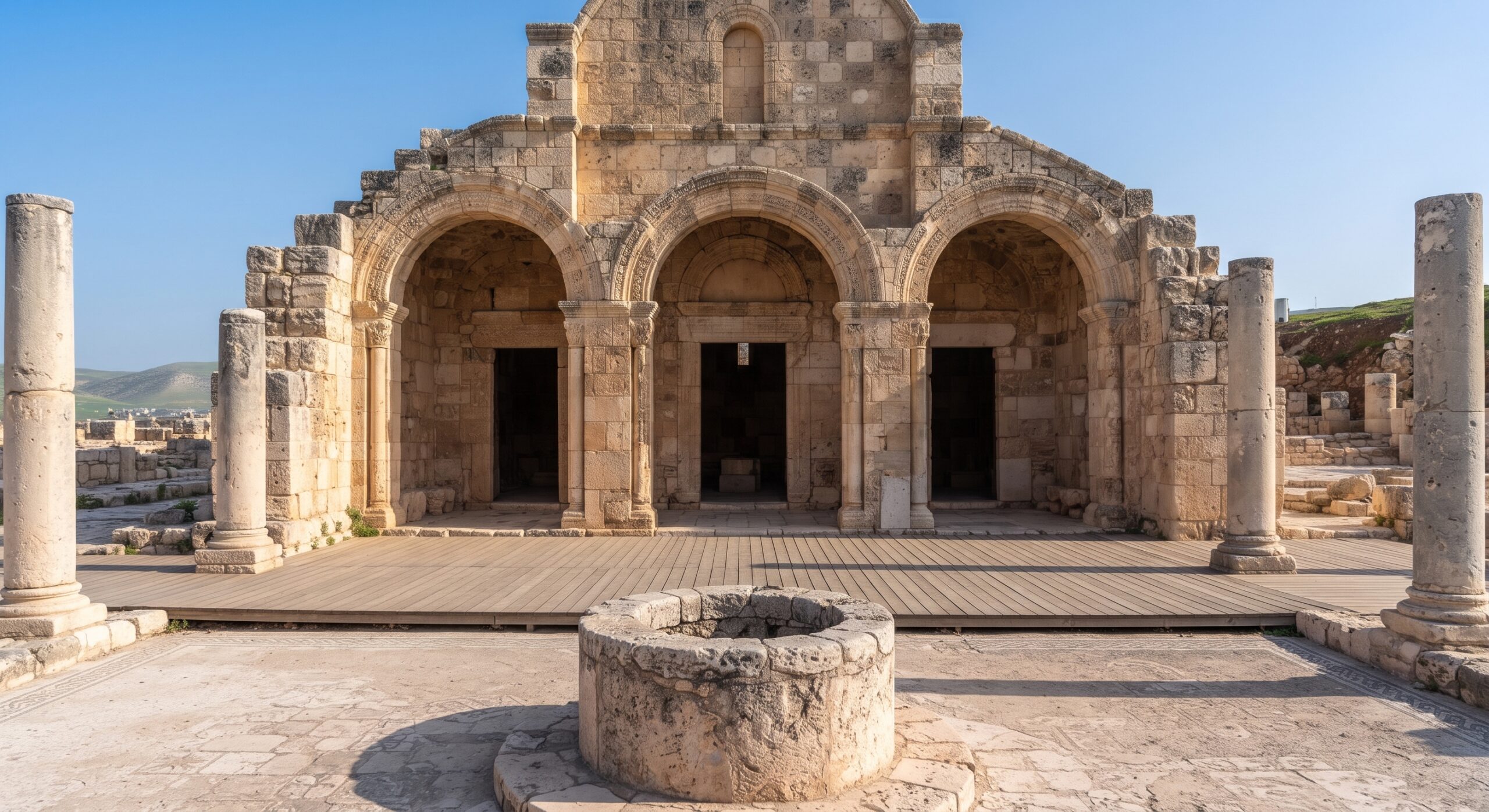
The Great Church of Tell Mar Elias is one of the site’s most impressive archaeological features. Dating to the Byzantine period, it follows a rectangular basilica plan and covers approximately 1,300 square metres.
Its architectural layout reflects the design of early Christian churches, with three longitudinal aisles and three apses arranged along the eastern, northern, and southern sides. The central aisle is the largest of the three.
The eastern apse formed part of the sanctuary, where religious ceremonies were performed. Two rooms stood on either side of the main apse, traditionally interpreted as spaces for preparing the Eucharistic offerings and changing ceremonial garments, and for keeping offerings and gifts.
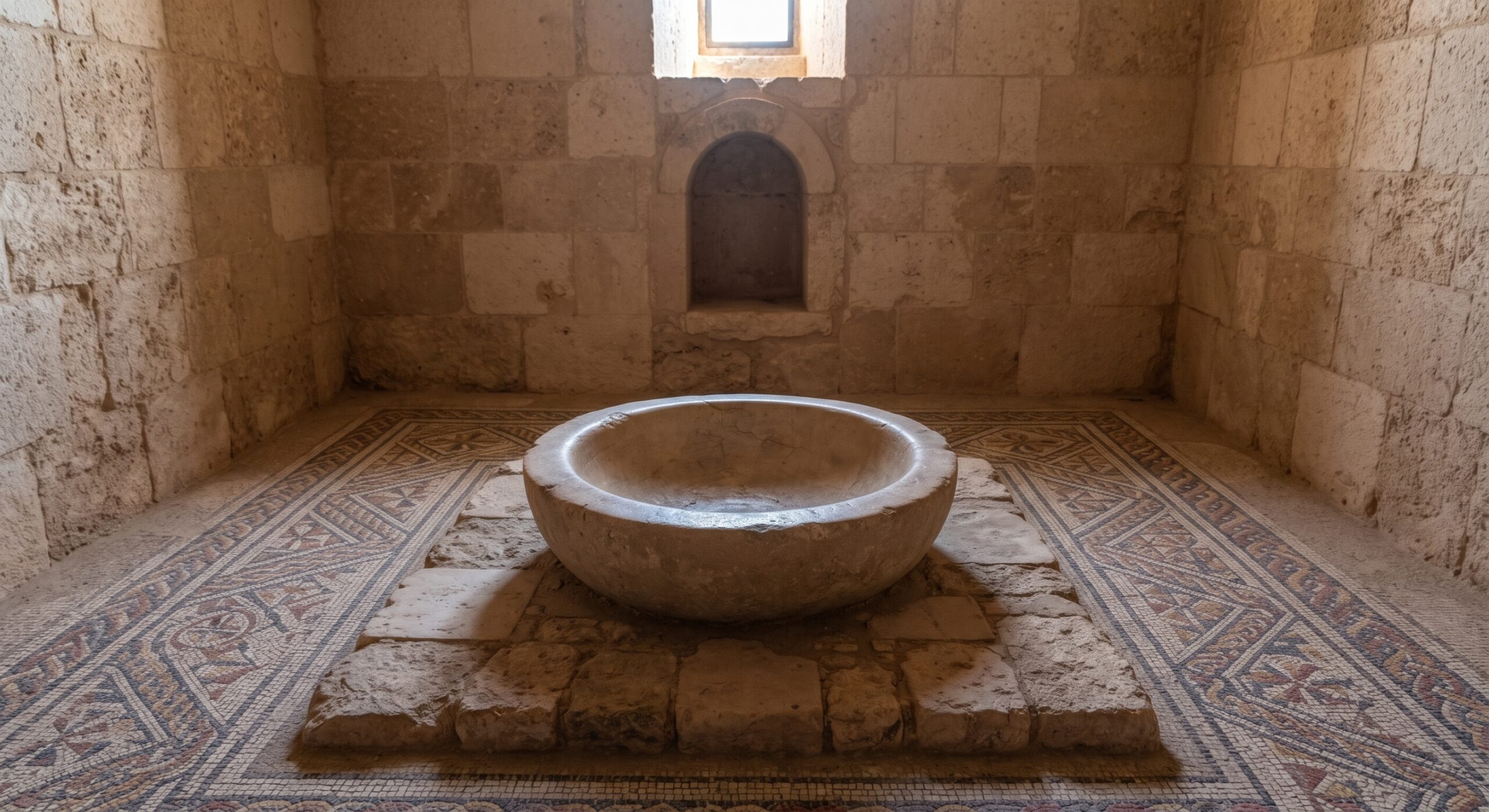
On the northern side, visitors can identify a room believed to have been used for baptising children. A small raised baptismal basin stands within the room, whose floor was decorated with mosaics.
The main entrance was located on the western side of the church, opening towards a semicircular open courtyard with a water well at its centre. To the south, additional rooms provided accommodation for clergy and monks, while a nearby wine press points to the agricultural activities associated with the complex.
Byzantine Mosaic Floors and the Greek Inscription
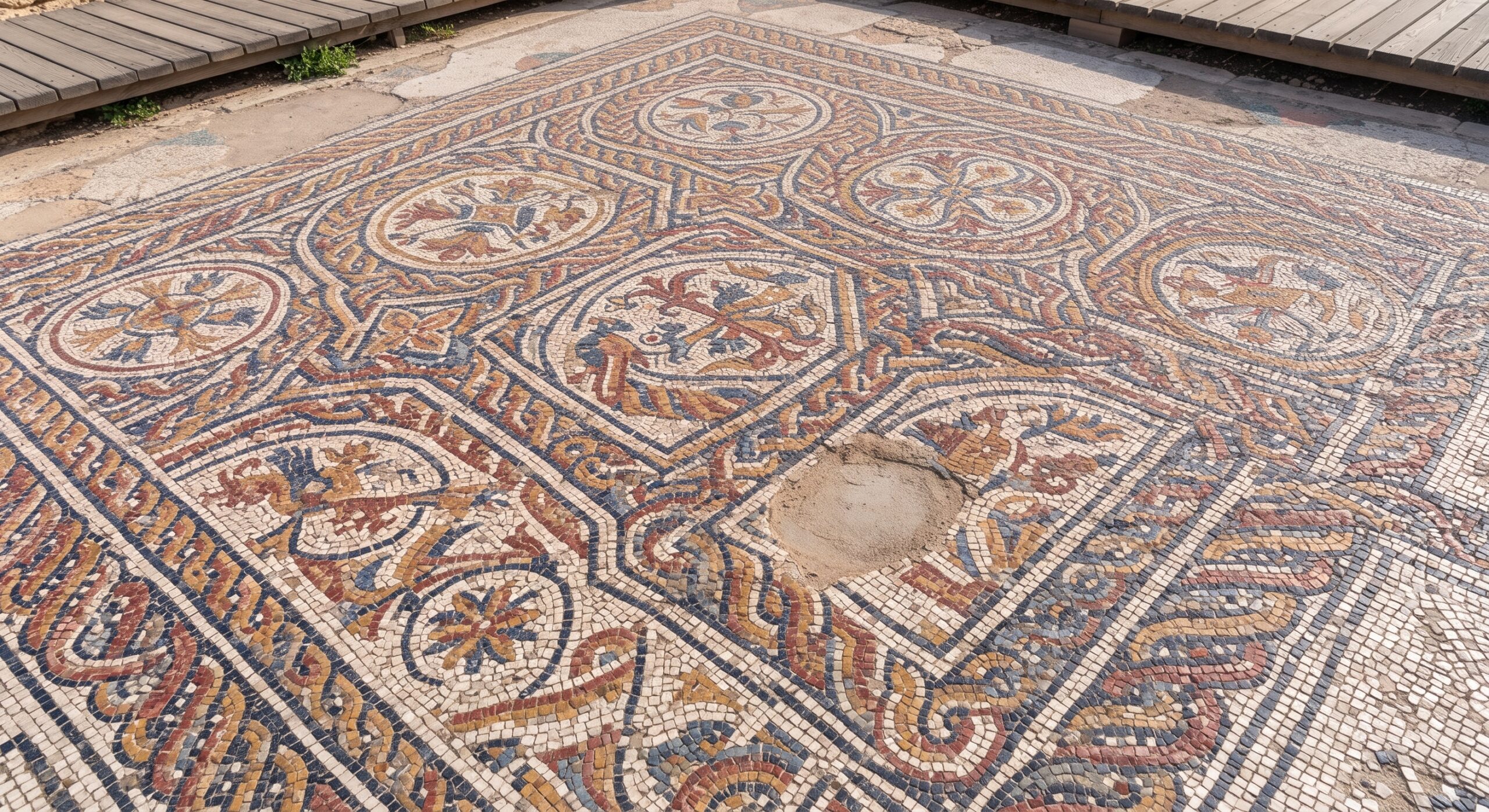
The church’s floors were once decorated with colourful mosaics featuring geometric and plant-inspired patterns. Although only limited sections survive, they offer an indication of the building’s original decorative character.
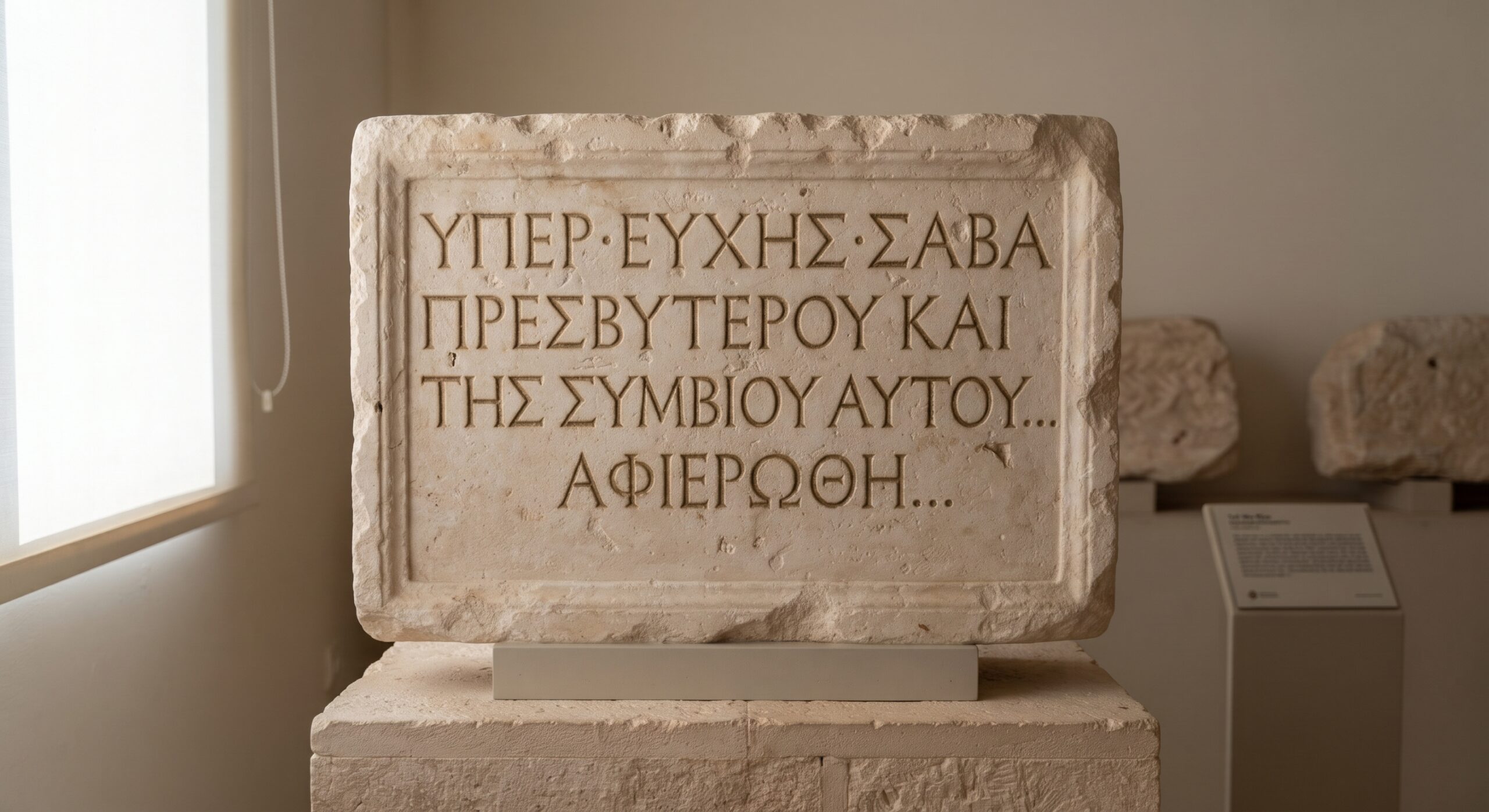
One particularly important discovery is a Greek inscription associated with the dedication of the church. The inscription dates to approximately AD 622 and refers to a priest named Saba and his wife, who contributed to the church dedicated to the holy Prophet Elijah.
This inscription provides a valuable historical reference for the church and helps establish its place within the religious landscape of the early seventh century.
The Small Church (Lower Church)
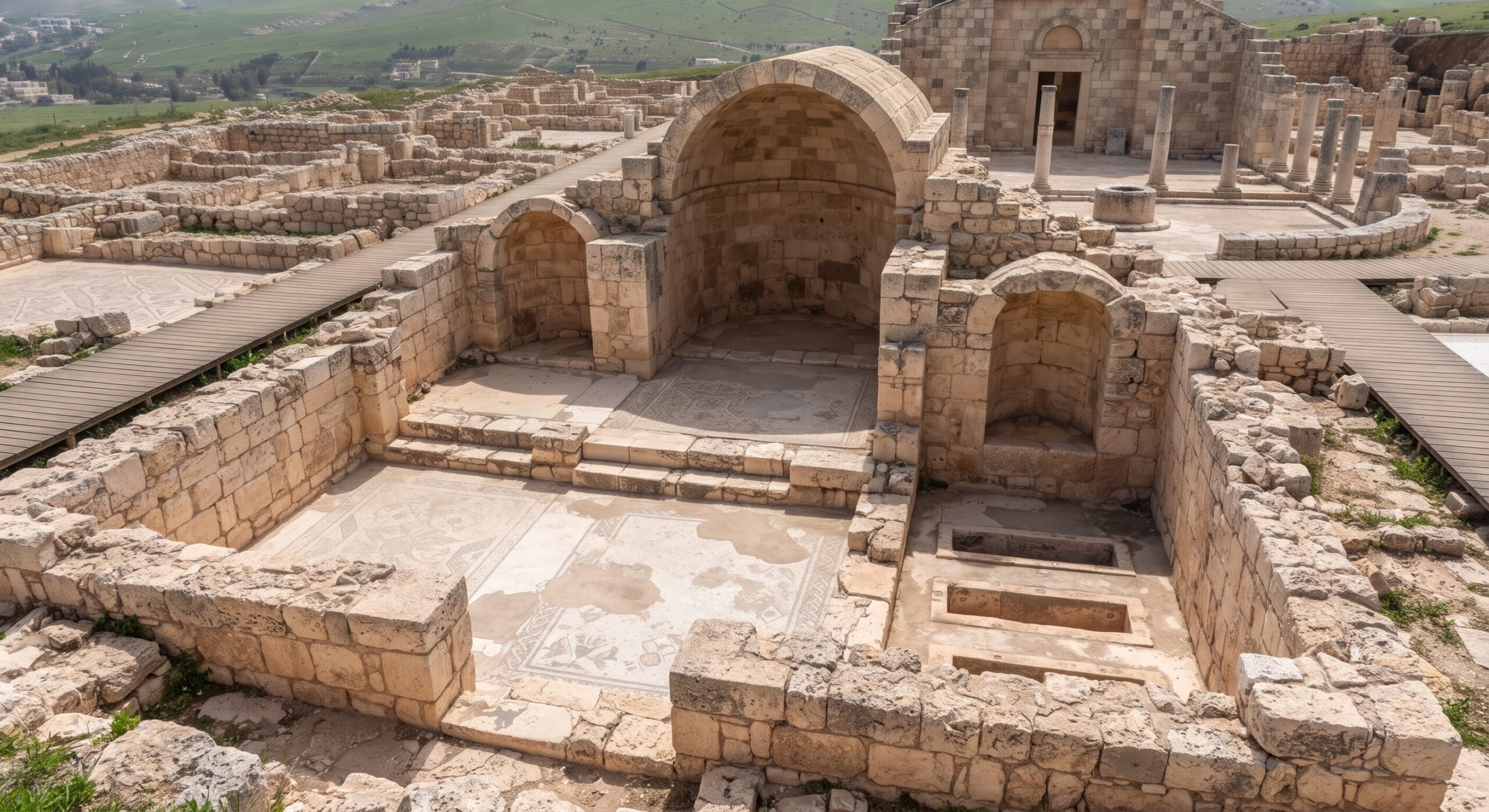
Located at a lower level and to the west of the Great Church, the Small Church at Tell Mar Elias offers a different architectural layout.
Unlike the larger basilica, this building consists of a single nave, three apses, and two side rooms. The eastern apse is the largest, while the northern and southern apses are smaller and arranged around a central space.
The northern room has two floor levels connected by two steps. In the southern room, archaeologists identified four underground graves, which are believed to have been associated with members of the clergy.
Its relatively modest size and distinctive plan have led researchers to suggest that the church may have served a specialised religious function, potentially connected with funerary practices or other ceremonies.
Although smaller than the Great Church, this structure adds to our understanding of how different spaces within the site may have supported the religious life of the community.
The Ancient Wine Press
Beyond the southern side of the Great Church lies an ancient wine press that reveals another aspect of daily life at Tell Mar Elias.
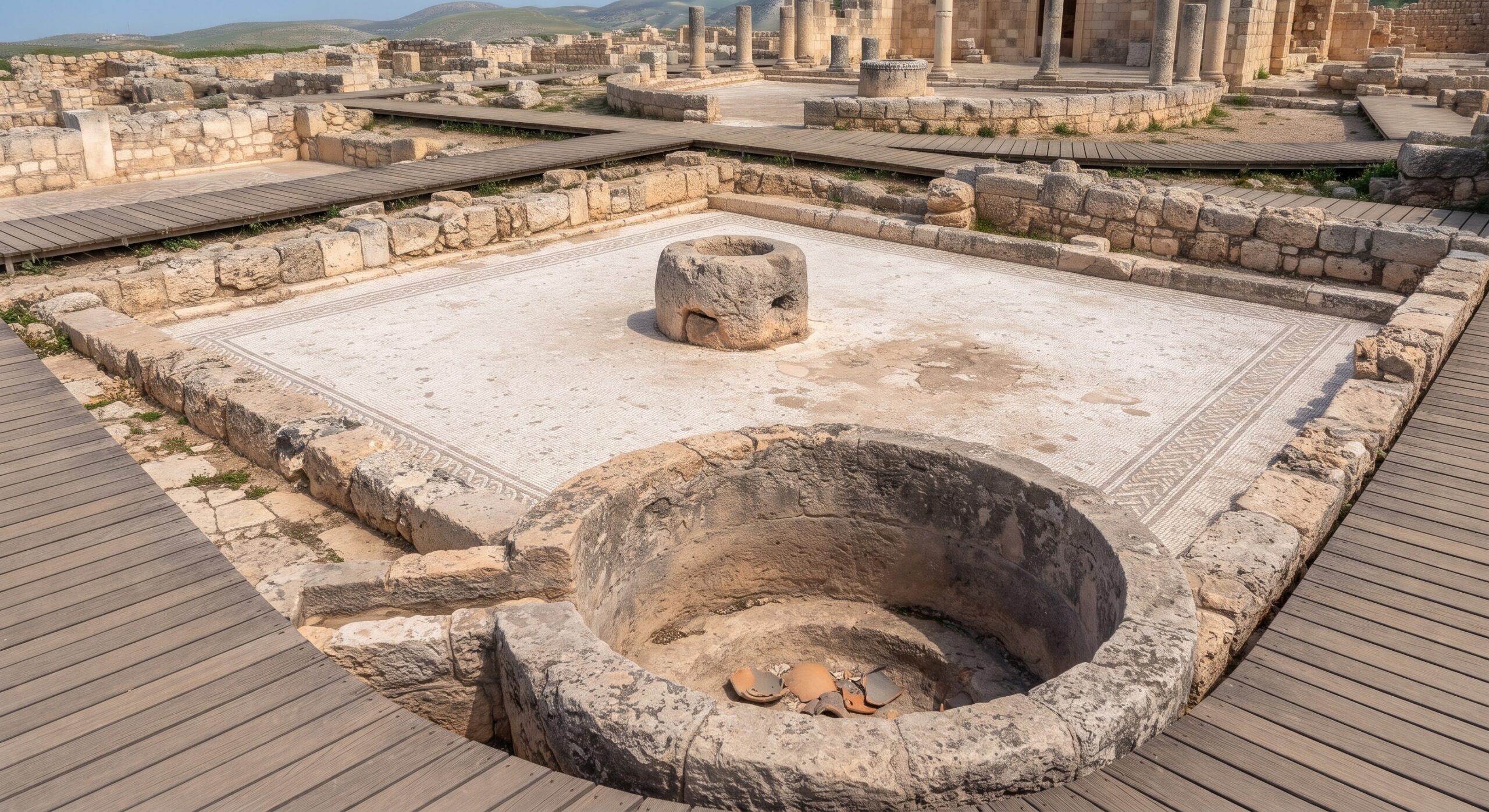
The installation consists of an almost square pressing basin measuring approximately 8.5 by 9.3 metres. Its floor was paved with white mosaics, and a stone socket at the centre was designed to hold a wooden screw mechanism.
During the pressing process, crushed grapes were placed in flat baskets beneath a wooden beam. Pressure from the mechanism helped extract the juice, which flowed into a collection basin on the southern side of the installation. This basin measured approximately 90 centimetres in diameter and 120 centimetres in depth.
Before the final pressing, grapes were commonly crushed by foot to prepare them for further extraction.
The resulting juice could be used to produce grape syrup, vinegar, or wine. The remains therefore suggest that grape processing formed part of the local economy and may have supplied products for the community associated with the church during the seventh century AD.
This feature is a reminder that Tell Mar Elias was not only a place of worship but also a setting for practical activities that supported everyday life.
The Cave Cemetery
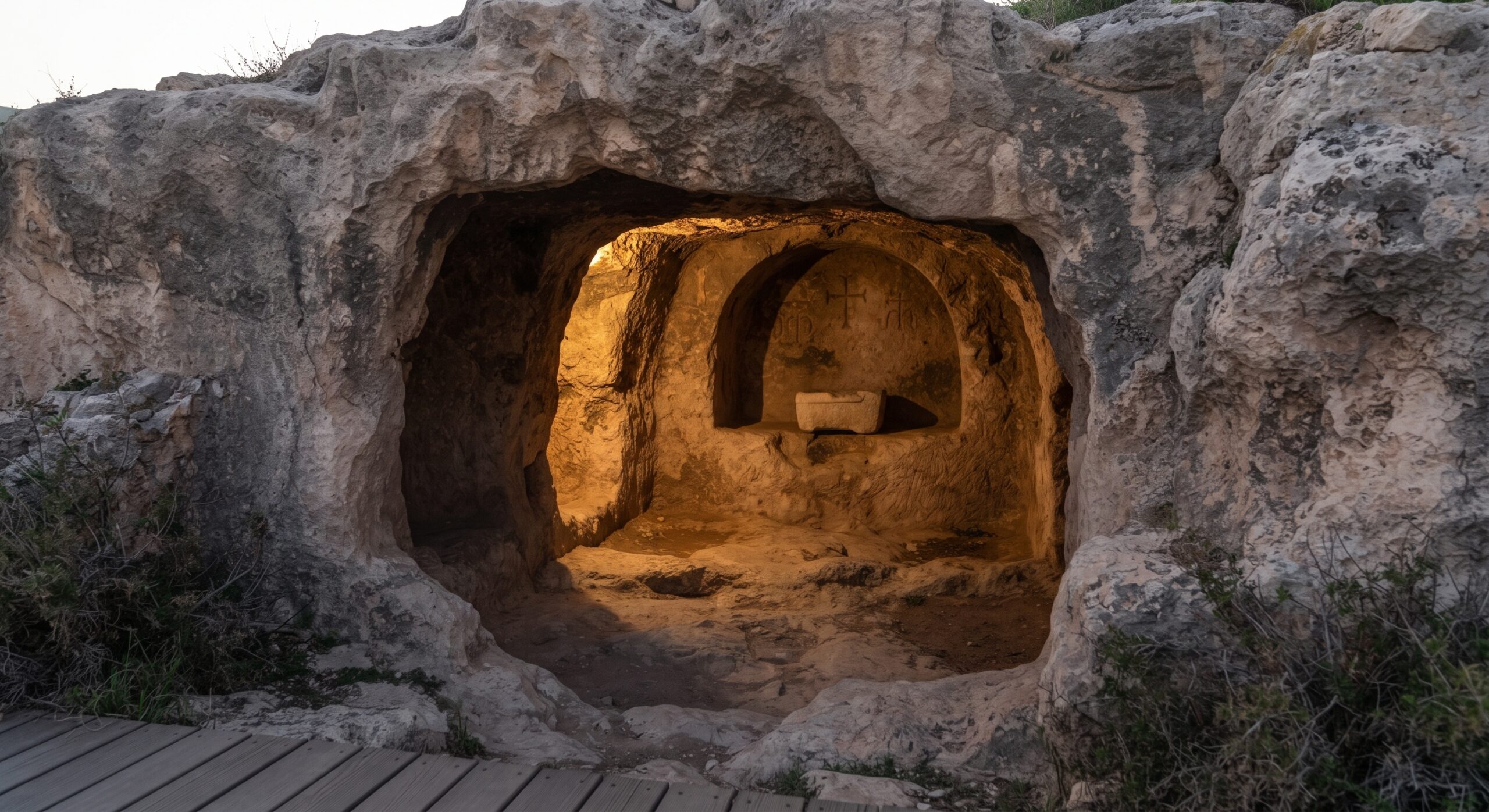
Another important feature of the archaeological complex is the cave cemetery, situated south of the Great Church.
The burial area consists of two chambers. The outer chamber was built with cut stone, although much of the surviving structure is now limited to its foundations. It contains three graves.
The inner chamber takes the form of a cave, partly carved into the natural rock. Five additional graves were identified here: four set within niches in the walls and one positioned in the floor of the chamber’s courtyard.
Based on its location and arrangement, the cemetery is believed to have been associated with the clergy who served the church.
Together with the other burial remains at Tell Mar Elias, this discovery provides further insight into the community that lived, worshipped, and was laid to rest in the area.
Nearby Heritage: The Historic Mosque of Listib
A visit to Tell Mar Elias can also introduce travelers to the neighbouring village of Listib, located approximately half a kilometre away.
The village is traditionally associated with Thisbe, the place linked to the Prophet Elijah’s origins. Archaeological remains here include a mosque dating to the Umayyad period, reflecting the area’s continued importance after the Byzantine era.
The mosque was later rebuilt and restored by Jordan’s Ministry of Awqaf, Islamic Affairs and Holy Places.
Exploring Tell Mar Elias alongside Listib provides a broader understanding of the region’s religious heritage, revealing traces of different periods within the same landscape.
Why Visit Tell Mar Elias?
For visitors interested in Jordan’s history beyond its most famous attractions, Tell Mar Elias offers a rewarding opportunity to explore a lesser-known archaeological destination.
The site brings together several areas of interest:
- Biblical heritage: Discover the traditions connecting the area with the Prophet Elijah.
- Byzantine architecture: Explore the remains of two early Christian churches.
- Ancient mosaics: See surviving traces of the decorative floors that once adorned the church complex.
- Archaeological history: Learn about the discoveries made during excavations between 1998 and 2002.
- Religious continuity: Understand the area’s significance across different historical periods through the remains at Tell Mar Elias and nearby Listib.
- Ancient daily life: Discover evidence of grape processing, burial customs, and accommodation for members of the clergy.
Whether your interest lies in biblical history, archaeology, architecture, or cultural heritage, Tell Mar Elias offers a meaningful perspective on the many layers of Jordan’s past.
Plan Your Visit to Tell Mar Elias, Jordan
Located in northern Jordan, Tell Mar Elias Archaeological Site is worth considering for travelers who want to explore the country’s religious and archaeological heritage.
You can combine your visit with other destinations in northern Jordan, depending on your travel route and available time. The surrounding region offers a different perspective on the country, away from the better-known archaeological landmarks of Petra and the desert landscapes of Wadi Rum.
At Jordan Heritage Tour & Travel, we can help you plan a private journey through Jordan’s historic sites, with transportation arranged according to your itinerary and interests.
Discover the stories behind Jordan ancient landmarks and experience the country’s cultural heritage at your own pace.